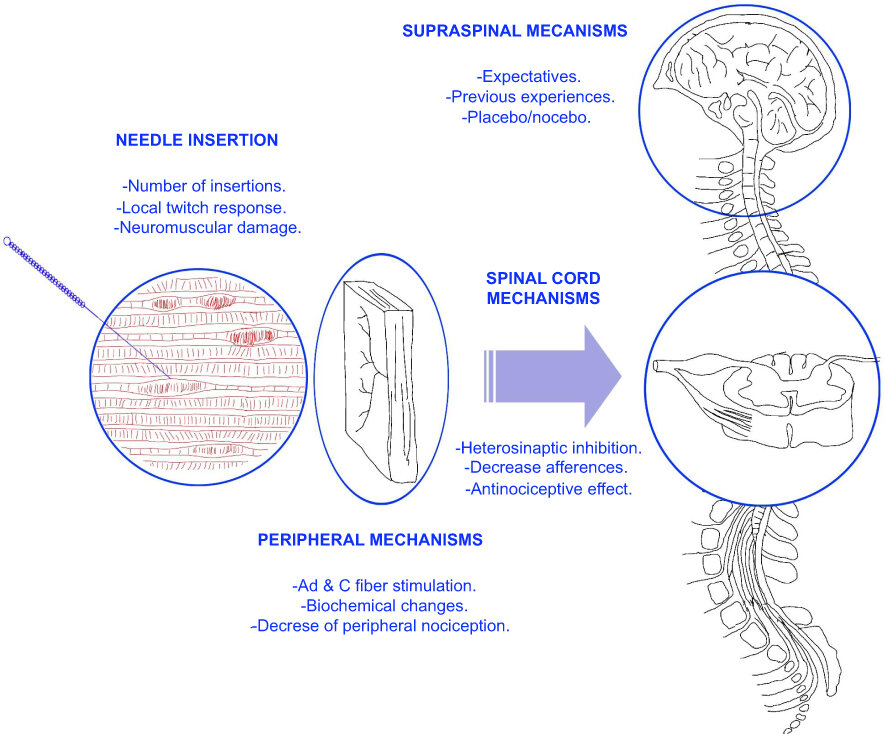
Dry needling is thought to have a range of neural and biochemical effects that can contribute to pain relief. Insertion of needles stimulates free nerve endings, sensory receptors and autonomic fibres in skin, muscle and connective tissue. It also causes the release of a range of neuroactive mediators, including endogenous opioids, which can inhibit transmission of nociceptive signals in the peripheral and central nervous system and alter pain perception. Causing low-level, isolated tissue injury with needle insertion can also cause positive inflammatory and immune responses, which can contribute to analgesia/pain relief.
Dry needling is most commonly used to treat intramuscular trigger points, but methods targeting joints, tendons, ligaments, bone and scar tissue can also be implemented by those trained in more advanced techniques. Trigger point techniques often aim to produce a local muscular twitch response, thought to be caused by stimulation of a spinal reflex loop.137
This has been linked to an immediate reduction in extracellular neurotransmitter concentration in muscle tissue surrounding a trigger point,138 and a twitch response is anecdotally thought to indicate the needle has ‘hit the right spot’. Research hasn’t shown consistent evidence that this is true and effective treatment outcomes can still be achieved without local twitch responses.
There is a vast amount of research on the effects of dry needling and acupuncture. However, interpretation of this research is sometimes complicated by the wide variety of conditions treated, differing underlying treatment paradigms (traditional Chinese medicine versus a Western biomedical model), as well as a large variation in treatment protocols and study quality.
Nevertheless, a substantial amount of high quality evidence suggests dry needling is more effective than placebo or sham treatments for a range of musculoskeletal conditions such as lower back, neck and shoulder pain, chronic muscular pain, headache, and knee osteoarthritis.140–144
Dry Needling/Western Acupuncture can also be used to treat or manage: